
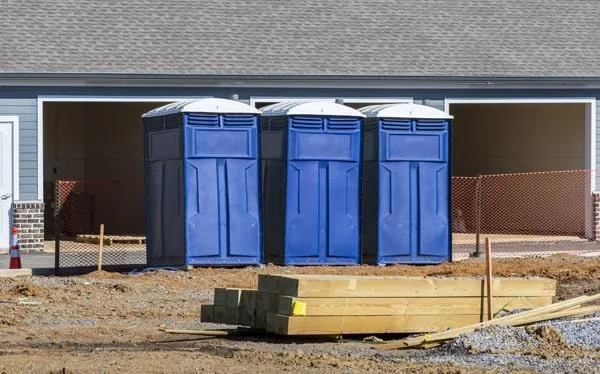
Use standard cabins as the starting point
A standard portable toilet provides a self-contained restroom where a permanent facility is not available to the workforce. It can be appropriate for temporary construction use, but the number and arrangement should be reviewed using the crew size, shifts, hours on site and access to other restrooms.
Describe any needs for accessible equipment or additional washing facilities. A handwashing station is a separate equipment decision unless the selected unit includes suitable washing features. Do not assume that every standard cabin contains a sink or that a picture identifies the model supplied.
Choose a position that survives the next work phase
Identify a firm, stable location away from planned excavation, material storage, moving equipment and site entrances. The restroom should be usable from the active work area without requiring workers to cross an avoidable vehicle conflict.
Explain the route from the public entrance to the proposed position, including gates, turns, soft ground and overhead obstructions. The vehicle approach and the cabin footprint are different requirements. Discuss both before delivery rather than assuming that enough space for the unit means enough space to place it.
Keep the service route in the jobsite plan
A route clear on delivery day can disappear behind fencing, pallets or parked equipment. Agree who will provide access for cleaning and waste service, and include the unit's location in coordination with other trades.
Ask which cleaning visits and consumables are included for the expected use and duration. Have a site contact report missing supplies, a damaged or tipped unit, or an inaccessible route. Do not move or attempt to repair equipment without advice from the rental team.
- Keep gates and agreed approaches available at the service time.
- Notify the contact before relocating fences or storage near the unit.
- Report changes in crew size or shifts so the service plan can be reviewed.
Tie the rental period to milestones, not assumptions
Share the expected start, active work period and likely completion date, including uncertainty between phases. Ask how extensions and planned pauses are handled rather than assuming a monthly label has a particular billing period.
Confirm when delivery can occur, who will direct placement and how pickup is requested at closeout. Finishing the work does not by itself arrange collection. Clear the removal route before the agreed visit and communicate any restriction that remains.
Request the operational details in writing
A construction quote should identify the equipment, rental period, delivery and collection, cleaning schedule and included supplies. Ask which changes in usage, location or duration need a revised arrangement. Compare like-for-like scope without relying on an unsupported standard price.
Equipment availability, the actual model and the workable setup need confirmation for the site. If the project has specific sanitation or accessibility requirements, communicate them and obtain applicable site-level guidance; a portable toilet rental is not a blanket compliance certificate.
Questions before you book
What crew information should I provide?
Give the expected workforce at the busiest time, shifts, hours of use, project duration and access to other restrooms. Mention foreseeable increases or phases rather than only the opening-day crew.
Can the toilet move as construction progresses?
Discuss any proposed move with the rental team first. The new position must be suitable for use, placement and continued servicing; moving it without coordination can create access and safety problems.
How do I arrange removal when the job ends?
Use the agreed contact process to request pickup and confirm when the removal route will be clear. Do not assume that the estimated project finish automatically schedules collection.