
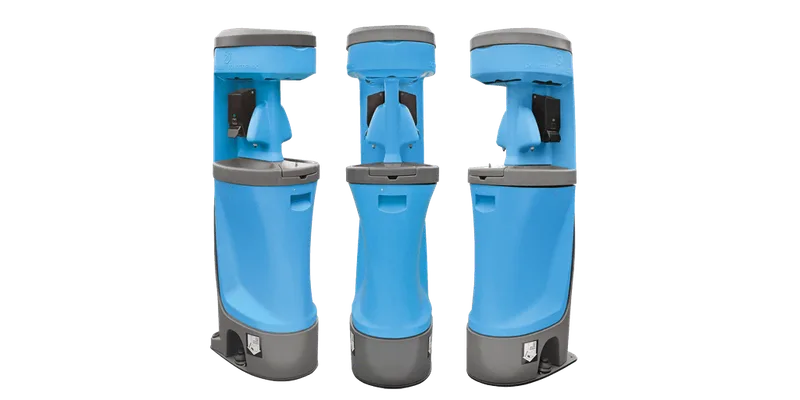
When a handwashing station adds value
A portable toilet addresses restroom needs; a handwashing station provides a separate place to wash hands. Combining the two can be useful for outdoor events, food-service areas, construction activity, volunteer operations, seasonal properties, and other sites where users may not have ready access to an indoor sink.
A portable washing station commonly separates its clean-water supply from collected used wash water. Confirm how the proposed model supplies water, whether it is self-contained or needs a permitted connection, and what soap and hand-drying materials are included. A sanitizer dispenser is a different arrangement; it is not a sink with water and soap.
The need depends on what is happening at the site and where people will be. An event with food, several activity zones, or a long walk to permanent facilities may benefit from considering handwashing in the layout. A work site can use a station near the crew area when a practical hygiene point is needed during the day.
- Outdoor gatherings with food or shared activity
- Construction and project sites with active crew areas
- Vendor, volunteer, or staff locations
- Temporary sites without convenient indoor sinks
Place stations where people can use them easily
A handwashing station should be on stable ground with enough surrounding space for people to approach, use it, and move on without creating a pinch point. Near a restroom group, food area, or work zone may make sense, but it should not obstruct a queue, doorway, emergency path, vehicle lane, or active operating area.
Consider the complete route, not only the final placement spot. Delivery and any arranged refill or service activity need practical access. Share gates, driveway conditions, surface changes, overhead obstacles, schedule restrictions, and the site contact who can direct access on arrival.
- Choose a stable, accessible surface.
- Allow room for users and avoid blocking circulation.
- Keep the station visible to the people it is intended to serve.
- Preserve an approach for delivery and any planned service activity.
Coordinate stations with restroom layouts
Handwashing is most effective when it is planned with the restroom layout rather than placed wherever space remains. Standard portable toilets can form the main restroom group, while an accessible restroom should be considered in relation to a practical accessible approach. Stations can then be positioned where they support those users and the broader activity flow.
For a spread-out event, one central station may not serve every activity area well. For a compact jobsite, locating it near the crew’s daily work zone may be more useful than placing it at a distant perimeter. The applicable station configuration and availability are confirmed for the specific request.
- Start with the people and zones that need restroom access.
- Add handwashing near high-use or food-related activity where appropriate.
- Keep accessible routes and approaches in mind when arranging the group.
- Revisit locations if the site layout changes before the rental begins.
Details that help shape a quote
When requesting a handwashing station, provide the address, dates, activity type, expected users, placement idea, and any restrooms or other sanitation equipment being considered. For food service or a managed venue, include the organizer’s approved layout, access rules, and the contact responsible for receiving equipment.
A clear quote request also identifies whether the need is short-term, multi-day, or connected to an ongoing project. Rental coordination can then address the requested equipment, planned duration, delivery and collection details, and any discussed supply or service arrangements without assuming site conditions.
Set responsibility for refilling clean water, replenishing soap and drying supplies, and removing used wash water before the rental starts. The needed visits depend on use and the actual station, not just the number of days on site. Keep access available and contact the provider if water or supplies run low; do not assume a park tap or drain is available for use.
- Site address and use dates
- Event, food, work-site, or other activity description
- Expected users and key activity zones
- Placement, access, and property-approval information
- On-site contact and any delivery timing restrictions
Questions before you book
When should handwashing be added?
Consider it when portable restrooms are being used without nearby sinks, particularly around food activity, shared work areas, outdoor events, or dispersed sites. The right arrangement depends on the site and anticipated use.
Where should a portable handwashing station be placed?
Use stable ground near the people and activity it is meant to serve, with room for users to approach and leave. Keep it clear of queues, entrances, emergency routes, vehicle lanes, and other obstructions.
Can a handwashing station be rented with standard and accessible restrooms?
Yes. It can be planned as part of a restroom group, with standard units providing core capacity and accessible equipment considered where appropriate. Layout and available equipment are confirmed for the request.
Are handwashing stations useful for construction sites?
They can provide a convenient hygiene point near crew activity where permanent sinks are not readily available. Share the work area, access route, shift pattern, and planned duration when discussing the site.
What details should I provide for an event handwashing request?
Provide the address, dates, attendance estimate, food or vendor areas, proposed placement, other restroom needs, access instructions, and a contact who can coordinate at the venue.