
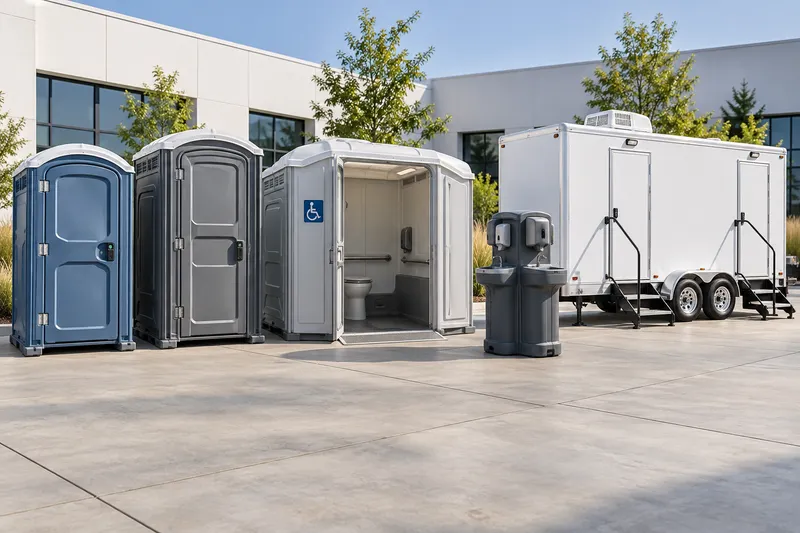
Select the equipment that fits the use
Standard portable toilets provide a straightforward restroom option for work sites, outdoor projects, and casual gatherings. An accessible portable restroom offers a more spacious option for users who need it. Handwashing stations complement restroom placement and can be useful near food service, activity areas, or work zones.
Share the expected users, dates, and type of activity when requesting equipment. The proposed unit type and availability should be confirmed for the particular site and rental period.
- Standard units for general restroom needs
- Accessible units for a more accommodating option
- Handwashing stations for added hygiene support
Build a placement plan that works through collection
Choose a firm, level location that is practical for users and clear of doors, driveways, work activity, and emergency circulation. Delivery, servicing where applicable, and collection depend on a safe vehicle approach. Tell the coordinator about gates, overhead obstructions, soft ground, narrow entrances, or other conditions that affect access.
For longer use, keep the approach open and communicate changes in construction, event layout, weather conditions, or property access. Confirm the rental duration, approved placement location, site contact, and collection access before the equipment is scheduled.
- Use a stable surface with a clear vehicle approach
- Keep the placement area out of traffic and operating zones
- Maintain access for service and collection
Ask Town Park questions before finalizing a gathering layout
For a Pembroke Town Park pavilion gathering, confirm the current permit and site conditions directly with the Town. A Town Park Pavilion Permit marked July 2024 provides a useful, limited example: it says renters of the pavilion with bathrooms must collect and return restroom keys, directs vehicles to parking lots after drop-off, prohibits grass parking, and warns against tent stakes because of septic and electric concerns.
That dated permit is not a general placement authorization or a substitute for current Town approval. It does show why a park event plan should identify restroom access, the post-drop-off parking arrangement, activity boundaries, approved routes, and whether any proposed equipment or anchoring is acceptable. Coordinate the venue plan before arranging supplemental restrooms.
- Confirm current pavilion approval and restroom-key procedures
- Plan vehicle parking after drop-off rather than assuming grass access
- Identify approved routes and protect septic and electric areas
Request a clear rental quotation
Include the location, dates, equipment requested, anticipated users, proposed placement, access notes, and venue contact if applicable. The quotation can clarify equipment, delivery and collection coordination, and the care or servicing scope for the planned period. For a park request, provide only placement information that has been approved by the operator.
Questions before you book
What should be checked at Pembroke Town Park?
Confirm the current pavilion permit, reservation status, restroom access process, permitted activity area, parking instructions, and whether supplemental equipment is allowed at the proposed location.
How do parking and ground restrictions affect placement?
They can limit vehicle approach and where equipment may be located. The July 2024 permit example directs vehicles to parking lots after drop-off and prohibits grass parking; confirm current instructions with the Town.
Can equipment be placed before park approval is confirmed?
No. Obtain approval from the Town or venue operator for the gathering and proposed placement area before finalizing coordination.
What access route should I provide for a private Pembroke site?
Describe the entrance, gates, surface, overhead clearances, obstacles, approved placement area, and a contact who can assist with site access.